

Lemon Toy vs Rose Toy (2026): Which One Is Actually Better?

First came original rose toy .Then came the Lemon.Both are small, colorful clitoral stimulators built around air-pulse or suction-style stimulation, and both have become unusually recognizable online.
But if you're trying to decide between them, the obvious question — flower or fruit? — isn't actually the useful one.
The real question is:
Does the Lemon Toy feel different enough from a Rose Sex Toy to justify paying more for it?
And for people who already own a Rose, there's an even better question:
Will the Lemon actually add something new, or am I essentially buying another version of the same type of toy?
That's not just a theoretical question. Rose owners regularly ask whether a Lemon adds a genuinely different sensation or simply delivers another variation of focused suction stimulation.
After comparing the current Nancy Lem with The Rose sold by RoseToyOfficial, the answer is more nuanced than many comparison pages suggest.
The Lemon is not automatically a Rose 2.0.
It offers more individual intensity settings and a different body and nozzle design. But the Original Rose is substantially less expensive while matching the Lem on several headline specifications, including advertised battery life, approximate charging time, waterproof rating and sub-50 dB noise.
For most first-time suction-toy buyers, the Rose remains the easier value choice.
For someone who already likes a Rose but wants a different seal, shape or gentler progression through the lower settings, the Lemon becomes much more interesting.
Lemon Toy vs Rose Toy: Quick Answer
If this is your first suction toy, we'd start with a Rose.
If you already own a Rose and love it, don't buy a Lemon simply because it's newer. Buy it if you specifically want to experiment with a different fit and intensity progression.
If your current Rose feels too strong at the beginning, the Lem may also be worth considering because its 12 settings provide more steps through the intensity range.
And if you're assuming the Lemon is simply stronger?
Don't.
Hands-on comparisons of different Rose and Lemon models show that some Rose toys can actually feel stronger than the Nancy Lem.
That tells us something important:
Mode count is not the same thing as suction power.
Nancy Lem vs Original Rose Toy: Specifications
One problem with many Lemon vs Rose comparisons is that they compare a specific premium Lemon against an undefined collection of generic Rose toys.
That's not especially useful.
So here we're comparing two specific products:
Lem by Nancy
vs
RoseToyOfficial Original Rose Toy
| Feature | Nancy Lem | Original Rose Toy |
|---|---|---|
| Listed price | About $89 | About $37.99 |
| Stimulation | Air-pulse stimulation | Air-pulse suction + vibration |
| Modes | 12 settings | 10 suction/vibration modes |
| Advertised noise | Under 50 dB | Under 50 dB |
| Battery life | Up to 120 minutes | Up to 120 minutes |
| Charge time | Approx. 90 minutes | Approx. 90 minutes |
| Waterproof rating | IPX7 | IPX7 |
| Material | Silicone | Silicone + ABS |
| Charging | USB-C or magnetic depending on version | Magnetic USB |
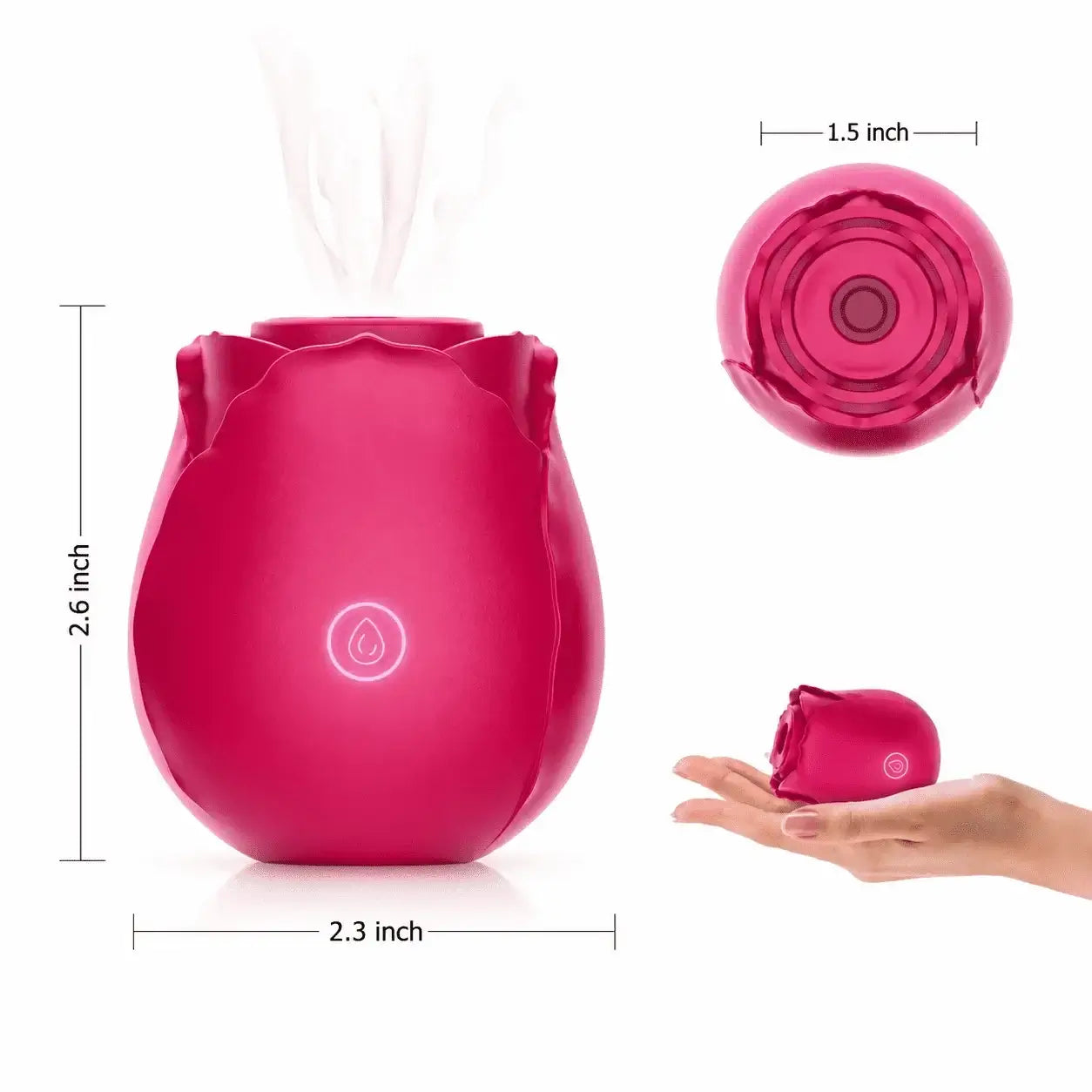
| Approx. size | 7.8 × 5.1 cm | 6.6 × 5.8 cm |
| Warranty | 12 months | 12 months |
| Return / trial window | 30 days | 60 days |
That already changes the comparison.
Some competing articles frame the Lem's battery life and quiet operation as major advantages over “the Rose,” but against this specific Original Rose model, those headline specifications are effectively tied.
The clearer differences are:
12 vs 10 settings, body and nozzle geometry, charging flexibility and price.
What Is a Rose Toy?
A Rose Toy is a flower-shaped external clitoral stimulator most closely associated with air-pulse or suction-style stimulation.
Rather than relying only on a vibrating surface pressed directly against the body, the opening surrounds the external clitoral area while the toy creates rhythmic changes in air pressure.
That's why a good rose sex toy can feel quite different from a conventional bullet vibrator.
If you're completely new to the category, our guide to what a Rose Toy is explains how air-pulse stimulation differs from traditional vibration.
But there's an important complication:
“Rose Toy” is no longer one exact product.
There are inexpensive generic Roses, branded Roses, suction-only models, suction-and-vibration designs, tongue-style models, dual-stimulation Roses and app-controlled versions.
Even Rose products that look almost identical can differ in motor performance, controls, nozzle geometry and overall construction.
So whenever somebody writes:
“The Lemon is better than the Rose.”
The first question should be:
Which Rose?
What Is the Lemon Toy?
The Lemon Toy takes the same general air-pulse concept and puts it into a rounded lemon-shaped body.
The best-known version right now is the Lem by Nancy.
Current versions are marketed with 12 stimulation settings, waterproof construction, rechargeable power and a compact fruit-shaped exterior.
Its obvious visual advantage is discretion.
A pink silicone Rose is now instantly recognizable to many people because of years of viral social-media exposure. A yellow lemon sitting in a drawer can be considerably less obvious.
But appearance isn't what determines whether it feels better.
The much more important difference is what happens at the nozzle.
The Biggest Difference Isn't Flower vs Lemon — It's the Nozzle
This is where most comparison articles should spend more time.
The outside may look like a flower versus a fruit.
But the part interacting with your body is the stimulation opening.
Differences in:
- opening shape,
- rim height,
- softness,
- chamber depth,
- angle,
- and how easily the opening forms a seal
can change the experience much more than the exterior shape.
This also helps explain why two users can have completely different opinions about the same suction toy.
One person may find a particular opening easy to position, while another may struggle to create a comfortable seal.
Anatomy matters.
What should you look at instead of shape?
Ask yourself:
Does my existing Rose fit naturally?
If yes, changing nozzle geometry may not improve much.
If you're constantly moving the Rose around trying to maintain stimulation, experimenting with another opening design makes more sense.

Does the Lemon Actually Feel Different From a Rose?
Yes, it can.
But there's no credible basis for saying that every Lemon feels one way and every Rose another.
Different hands-on comparisons have reached somewhat different conclusions.
Some reviewers describe the Lem as smoother through its lower settings and gentler at the beginning than the Rose models they compared it with.
Other experienced testers have preferred the stronger sensation, grip and seal of particular Rose models.
That's not a problem.
It's actually useful information.
When experienced users disagree about which feels better, it suggests that:
- the exact model matters;
- anatomy matters;
- and “Lemon vs Rose” is too broad to have one universal sensory winner.
That is a much more useful conclusion than pretending everybody will experience the same thing.
Which Is Stronger: Lemon or Rose?
If you only looked at product pages, you might assume:
12 settings > 10 settings = stronger.
That's not how it works.
The Lem offers 12 settings, while the Original rose toy offers 10 suction-and-vibration modes.
But the number of modes tells you how many steps or patterns are available.
It does not tell you the maximum pressure produced at the nozzle.
The sensation is affected by:
- air-pulse intensity;
- motor characteristics;
- pulse frequency;
- chamber design;
- nozzle geometry;
- and how effectively the toy forms a seal.
So our answer is:
Maximum intensity
No universal winner.
Number of available settings
Lem wins: 12 vs 10.
If you dislike abrupt jumps in intensity
The Lem may have an advantage because it provides more incremental steps through its intensity range.
That's much more meaningful than simply counting modes.
Which Is Gentler for Beginners?
This is where the Lem has one of its strongest arguments.
A wider range of progressive settings may give sensitive users more room to stay at the gentler end of stimulation.
That matters because one of the most common misconceptions about suction toys is:
Stronger = better.
It doesn't.
Some people love immediately intense stimulation.
Others find that overwhelming.
If your Rose feels too intense from the moment you switch it on, a Lemon with a more gradual low-end progression is a legitimate reason to consider switching.
But if you already enjoy your Rose's lower settings, that advantage matters much less.
Which Is Easier to Position?
There's no responsible universal winner here.
The Lemon is taller and narrower overall, while the Original Rose has a shorter, broader rosebud-shaped body.
That produces noticeably different hand geometry.
Some users may prefer the flatter, wider grip of a Rose.
Others may find the Lemon's narrower body easier to maneuver.
If you're new to suction stimulation, our how to use a Rose Toy guide covers positioning, starting intensity and preparation in more detail.
The better test is:
Can I keep the nozzle where I want it without constantly repositioning the device?
That's much more important than which one looks more ergonomic in a product photograph.
Rose Toy vs Lemon Toy: Battery Life
This is an area where the supposed difference is much smaller than many comparison articles imply.
Nancy Lem
Charge: approximately 90 minutes
Runtime: up to 120 minutes
Original Rose
Charge: approximately 90 minutes
Runtime: up to 120 minutes
So on the published specifications:
Battery result: Tie.
If you're considering spending considerably more on the Lem because you've heard that it lasts longer than “a Rose,” that argument doesn't apply particularly well to this specific Original Rose model.
Which Has Better Charging?
This comparison is more interesting.
Some Lem versions use USB-C charging, while other versions may use a magnetic charging connection.
The Original Rose uses magnetic USB charging. If you're unsure about charging times, indicator lights or magnetic connections, see our full guide on how to charge a Rose Toy.
USB-C has one obvious practical advantage:
Replacement cables are everywhere.
Magnetic charging works well for maintaining a sealed design, but losing the specific cable means you need a compatible replacement.
So:
Charging convenience: USB-C Lem version wins.
Charging time: Tie.
Runtime: Tie.
Which Is Quieter?
On published specifications, this is another tie.
Lem: advertised under 50 dB
Original Rose: advertised under 50 dB
We therefore wouldn't claim that one is dramatically quieter than the other based solely on those numbers.
Actual perceived noise can still differ because suction toys may sound different once the nozzle forms a seal.
Manufacturers may also use different testing environments.
That's why “advertised under 50 dB” is a more accurate description than pretending both numbers came from an identical laboratory test.
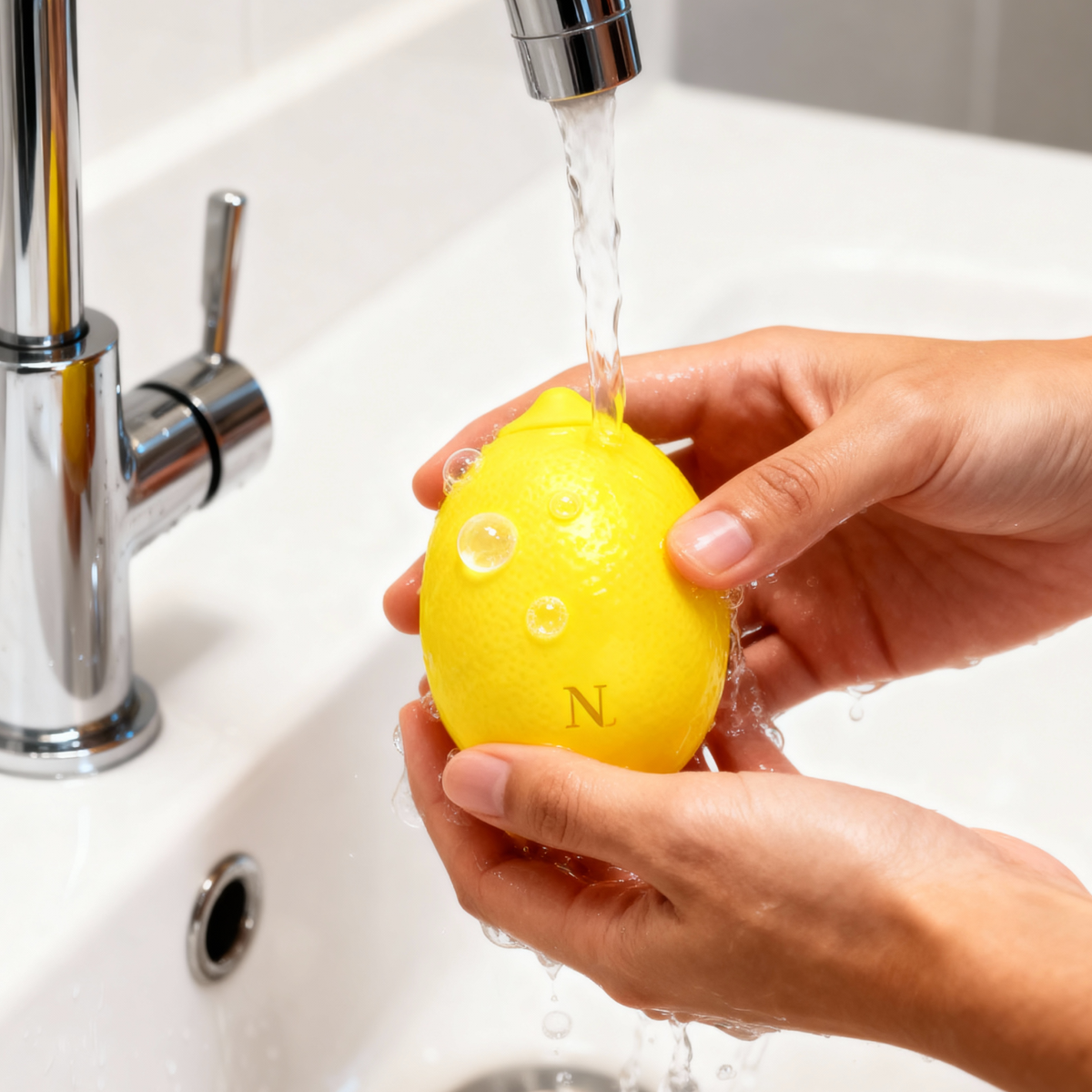
Which Is Easier to Clean?
This is one area where Lemon designs can have a genuine practical advantage.
Traditional Rose-shaped products have decorative petals surrounding the nozzle.
Those petals look good, but narrow grooves can hold lubricant or moisture if you rinse too quickly.
That doesn't mean Rose Toys are difficult to clean.
It simply means the spaces around the petals deserve a little extra attention.
Some Lemon designs use smoother exterior surfaces, potentially making them easier to inspect and rinse.
But not every Lemon automatically wins.
The internal suction chamber still matters.
A complicated or difficult-to-reach chamber can be harder to clean even if the outside looks simple.
So the useful lesson isn't:
Lemon = hygienic, Rose = unhygienic.
It's:
Look at the actual chamber and nozzle design.
For step-by-step care instructions, see our guide on how to clean a Rose Toy properly after use.
Which Offers Better Value?
This is where the numbers become difficult to ignore.
Nancy Lem: about $89
Original Rose Toy: about $37.99
That's roughly a $51 difference.
What does the Lem clearly add?
- 12 settings instead of 10;
- a different nozzle and body design;
- potential USB-C charging depending on the version;
- a more gradual intensity structure;
- and a less immediately recognizable lemon-shaped exterior.
What doesn't clearly improve on the published specifications?
- battery life;
- approximate charging time;
- IPX7 waterproof rating;
- and advertised sub-50 dB noise.
The Original Rose also offers a longer 60-day return window compared with the Lem's advertised 30-day guarantee.
So purely on specifications per dollar:
Rose wins on value.
That doesn't make the Lem overpriced for everybody.
It simply means the extra cost should buy you something you specifically care about.
Already Own a Rose? Is the Lemon Worth It?
This is the question we think matters most.
If you already have a Rose and you're happy with:
- its fit;
- lowest setting;
- maximum intensity;
- noise;
- battery;
- charging;
- and cleaning;
then you probably don't need a Lemon simply because it is trending.
You're buying a variation, not entering an entirely different category.
But the Lemon starts to make more sense when you can identify a specific problem with your current Rose.
Consider the Lemon if your Rose starts too strong
The Lem's additional progressive intensity steps may give you more room at the gentler end.
Consider the Lemon if you don't love the Rose nozzle
A different chamber and rim geometry may fit your anatomy differently.
Consider the Lemon if you dislike cleaning around petals
A smoother Lemon design may be easier to inspect and rinse, although the exact model still matters.
Consider the Lemon if you specifically want a different sensation
Some Rose owners do notice enough of a difference between the two designs to justify keeping both.
Skip the Lemon if you think 12 settings automatically means stronger suction
It doesn't.
Skip the Lemon if you're buying it only because it's newer
Newer isn't the same as better.
Skip the Lemon if your Rose already does exactly what you want
In that case, paying substantially more for another suction toy may not add much value.
What If You Don't Like Your Rose?
Before switching to a Lemon, work out why.
“It's too intense.”
A model with a gentler lowest level might make sense.
“I can't get the suction to feel right.”
Try adjusting the angle and pressure first. With air-pulse toys, even small changes in positioning can affect the seal and perceived intensity.
“The opening doesn't suit me.”
That's a much stronger reason to try another nozzle geometry.
“I just don't like focused external stimulation.”
Then another suction toy probably isn't the answer.
A broader traditional vibrator may make more sense.
Who Should Buy the Rose?
Choose the Rose if:
- this is your first air-pulse toy;
- you want to spend substantially less;
- you want multiple stimulation modes without paying a premium;
- you value a longer 60-day return window;
- you want the compact rosebud shape;
- or you already know you enjoy focused suction stimulation.
For first-time buyers especially, it may make more sense to spend around $38 discovering whether you even enjoy this type of stimulation than to assume an $89 product is automatically better because it's newer.
If you already know you prefer this style of stimulation but want to compare different designs, you can also browse the rose vibrator collection rather than assuming every Rose offers the same experience.
Who Should Buy the Lemon?
Choose the Lemon if:
- you've already used a Rose;
- you want more incremental intensity settings;
- the lower end of your current Rose feels too aggressive;
- you want a different nozzle or body shape;
- USB-C charging matters to you and your Lem version supports it;
- or you value a design that's less immediately recognizable as a sex toy.
The Lem is a stronger proposition as a second suction toy than as a mandatory upgrade from every Rose.
The Problem With Comparing One Lemon to “The Rose Toy”
Imagine comparing one specific premium sedan with:
“cars.”
That's essentially what some Lemon comparisons do.
They choose one specific premium Lemon and compare it with an undefined generic Rose.
But Rose Toys now range from very inexpensive marketplace products to more refined specialist models.
Differences can include:
- silicone construction;
- nozzle dimensions;
- intensity;
- motor quality;
- controls;
- charging;
- waterproof construction;
- warranty;
- and customer support.
So the fairest comparison is always:
specific model vs specific model
rather than:
all Lemons vs all Roses.
This matters especially now that “Rose Toy” has become a product category of its own.
Final Verdict: Lemon Toy or Rose Toy?
For most people buying their first suction toy:
We'd choose the Rose.
The Original Rose costs substantially less while matching the Lem's published battery life, approximate charging time, waterproof rating and advertised noise range.
For someone who already owns a Rose:
The Lemon can be worth adding — but only for the right reason.
The right reasons are:
different nozzle fit, gentler intensity progression, different grip, easier surface geometry or simply wanting another variation of air-pulse stimulation.
The wrong reason is:
“The Lemon has 12 settings, so it must be much better.”
It isn't that simple.
And that's really the biggest lesson from this comparison.
The Rose and Lemon aren't completely different technologies.
They're two interpretations of the same basic idea.
So don't ask:
Which shape is newer?
Ask:
Which fit, intensity range and price make more sense for me?
For a first purchase, the Rose remains difficult to beat on value.
For an experienced Rose user looking for a genuinely different fit or feel, the Lemon becomes much easier to justify.
Frequently Asked Questions
Is a Lemon Toy the same as a Rose Toy?
Not exactly. Both belong to the same broad family of external suction or air-pulse stimulators, but their nozzle geometry, body shape, intensity range and controls can differ.
Is the Lemon Toy stronger than the Rose?
Not necessarily. More settings do not automatically mean greater suction intensity. The specific motor, chamber design, nozzle and seal all affect how strong a toy feels.
How many modes does the Lemon Toy have?
The current Nancy Lem is marketed with 12 stimulation settings.
How many modes does the Original Rose Toy have?
The RoseToyOfficial Original Rose offers 10 suction-and-vibration modes.
Which lasts longer, Lemon or Rose?
On the published specifications compared here, both advertise up to approximately 120 minutes of runtime.
Which charges faster?
They are essentially tied on the published specifications at around 90 minutes for a full charge.
Which is quieter?
Both specific models compared here advertise operation below 50 dB. Actual perceived sound can still vary depending on intensity, positioning and how the air-pulse chamber behaves during use.
Is the Lemon better if my Rose feels too intense?
Possibly. A Lemon with more gradual intensity progression may suit someone who finds the lowest setting of a particular Rose too strong. But this depends on the exact models being compared.
Is the Lemon worth buying if I already have a Rose?
It can be if you specifically want a different fit, nozzle design or intensity profile. If you're already completely satisfied with your Rose, the Lemon may feel more like a variation than an essential upgrade.
Which is better for a beginner?
We'd generally lean toward the Rose because the category offers more models and price options, and the Original Rose gives access to the same broad air-pulse experience at a much lower current price.
Does the shape actually change how the toy feels?
The external fruit-or-flower shape matters less than the design of the stimulation opening. Nozzle geometry, chamber design, seal and intensity have a much greater effect on sensation.
Disclosure
RoseToyOfficial sells Rose Toys, including the Original Rose featured in this comparison.
That gives us an obvious commercial interest in the category. For that reason, this comparison separates published product specifications from broader user and reviewer observations rather than presenting marketing claims as universal facts.
Where experiences can reasonably differ because of anatomy, fit or individual product variation, we've said so rather than declaring one design universally superior.


